When South Australia’s harmful algal bloom spread along the coast in 2025, it devastated local communities and captured global attention.
For local researchers Amy McLennan, a medical anthropologist, and James Daniell, a global disaster risk analyst, it was shocking to see an ecological crisis unfold in their home state. As John Monash Scholars with global experience, they knew they had skills that could help.
“We’re not experts in algal blooms, so we didn’t initially see ourselves in the picture,” Amy says. “But we wanted to do some pro bono work. We knew there wasn’t an impact assessment happening and that was something we could offer.”
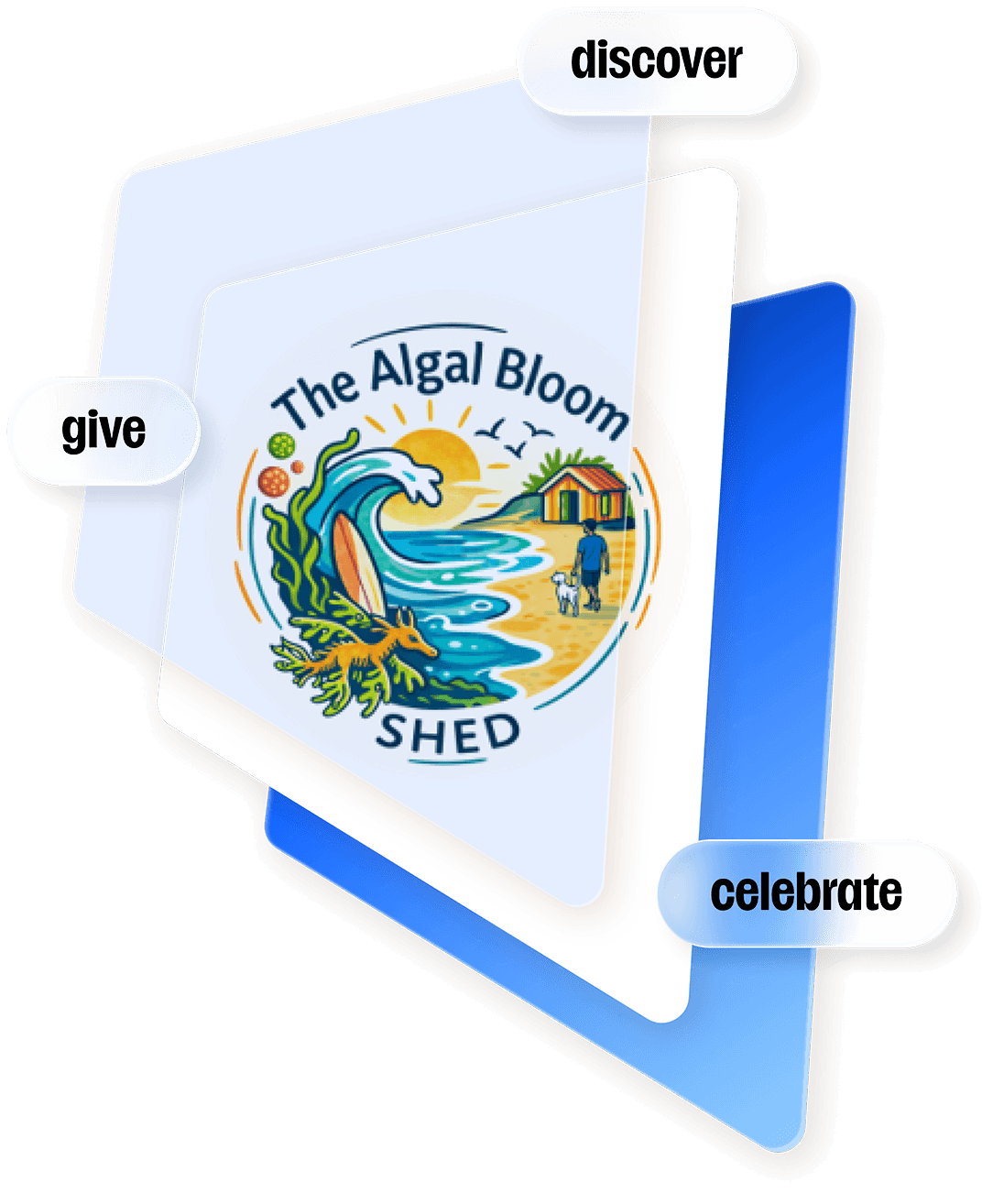
That decision marked the beginning of The Algal Bloom Shed — a space for experts and community members to share knowledge, solutions and prepare for what might come next.
Within hours of launching a website to collect data for their work (initially called Bloomin’ Algae), emails began arriving from researchers, journalists, lawyers, engineers, artists, consultants and concerned community members offering to help.
“We’d stepped into a much larger void than we anticipated. We seemed to have set up a lightning rod to attract people who were keen to lend their experience,” Amy says.
Amy and James chose the name ‘shed’ — an acronym for Spaces for Health, Ecosystems and Disasters — for the distinctly Australian image it evokes.
“Sheds are iconic in Australia. They’re places where people come together to tinker with tools, solve problems, and build something new. That’s exactly what we’re doing here.” — Amy McLennan, Co-founder, The Algal Bloom Shed
The group is delivering an impact assessment along with education and health projects, including the only ethics-certified health data collection tool related to the disaster. But Amy says the biggest challenge was coordinating volunteer expertise.
“Australia has strong, well-resourced volunteer structures around disasters like bushfires — networks of trained volunteers equipped with data and kit, who know each other and know how to respond. We didn’t have that around the algal bloom.”
Which is not to say that work wasn’t being done. Across coastal communities, citizen scientists were counting algae under microscopes they’d ordered online, collecting water samples, documenting impacts, creating wellbeing programs, and sharing data with researchers. Volunteer Surf Life Savers were cleaning our beaches and monitoring conditions.
“They’re all remarkable humans,” Amy says. “We hope our work can complement those efforts by connecting people and helping prepare smarter responses to whatever rolls in next.”
At The Shed’s first in-person event in March 2026, many volunteer experts met for the first time.
“I feared we’d be stepping on toes or asking too much, but I was surprised by how fragmented the ecosystem was,” Amy says.
Now, in addition to ongoing work around the bloom, the team is exploring how the shed concept could be formalised, resourced, and used for future disasters.
“There are so many people with valuable skills to offer in disaster response, recovery and resilience. We may not be firefighters or lifesavers, but we can play an important role.”
For Amy, the challenge now is making that spirit of giving sustainable and equitable.
“It can’t only be people with the luxury of time and financial security who can volunteer their expertise. We need to make it possible for everyone.”
While the next steps for the Shed are still unfolding, it has already delivered a much-needed space for research and innovation around the algal bloom, and a model for how expertise can be mobilised in a disaster.
Discover local organisations and projects making a difference across the state this SA Giving Week. Whether it’s lending your expertise like Amy and James, or giving your time, there are many ways to support your community.